
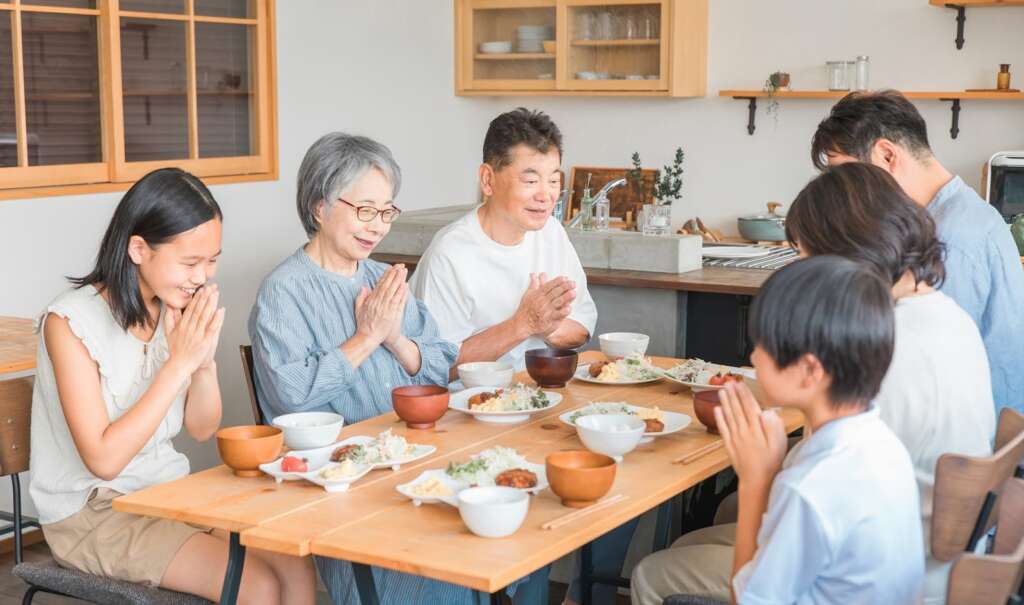
When eating with Japanese families, you may notice that something feels missing if these words are not said.
Before a meal, people say “Itadakimasu.”
After finishing, they say “Gochisousama.”
Parents often gently remind their children at the table,
“Didn’t you forget to say something?”
At first glance, these phrases may seem like simple table manners. In fact, teaching children to say them is often considered part of good upbringing. But behind these words lies something deeper. Understanding their meaning — and saying them with intention — is an important part of Japanese food culture and food education.
The deeper meaning of “Itadakimasu” and “Gochisousama”
Most Japanese people say “Itadakimasu” and “Gochisousama” every day without thinking too much about it. However, these words carry deep meaning.
“Itadakimasu” originally expresses gratitude toward the natural gifts that became the food on the table. Vegetables, rice, fish, meat — all of them come from living plants and animals. Saying “Itadakimasu” is a way of acknowledging that life was given so that we can live.
“Gochisousama” goes even further. It is not only a thank-you to the person who cooked the meal, but also to everyone involved along the way: the farmers who grew the crops, the fishermen who caught the fish, the people who transported the food, the shop staff who prepared it for sale, and the family members who bought and cooked it.
Japan is surrounded by the sea and rich with green mountains. For centuries, people here have lived closely with nature. These words reflect a uniquely Japanese way of expressing gratitude toward both nature and human effort.
Children learn through imitation — but meaning comes later
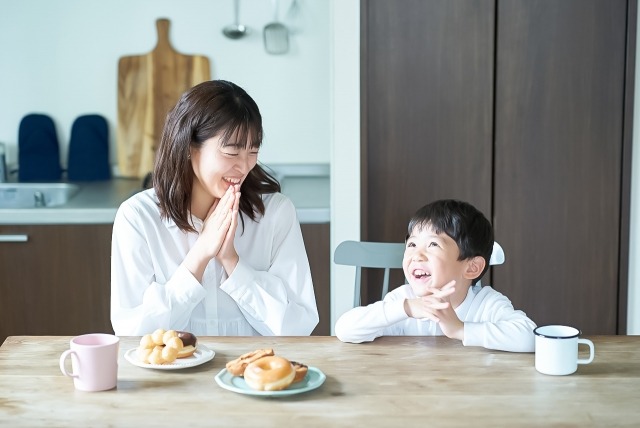
Children usually learn these words by imitation. At first, they simply copy what parents or teachers say, repeating the words from memory without understanding.
That stage may be called discipline. But explaining why these words matter — that they carry gratitude and respect — is food education.
Little by little, children begin to connect the words with feelings.
Saying “thank you for life” at the table
Imagine one daikon radish.
The skin is washed and pickled in soy sauce, becoming a snack for the parents.
The thick center is gently simmered and served as furofuki daikon.
The leaves are stir-fried with small dried fish, soy sauce, and sugar, becoming a favorite rice topping for children.
“Because someone worked hard to grow this,” a parent might say,
“we don’t want to waste any part of it.”
Without realizing it, children absorb ideas like “mottainai” (don’t waste), “eat with care,” and “be thankful.” These lessons are passed on not through lectures, but through everyday meals and small comments at the table.
Food is a gift from nature. Using it fully shows respect for the land, the people, and the lives involved.
Why these words are unique to Japan
Many languages have phrases said before eating, but their meaning is quite different.
In Italian: “Buon appetito” — enjoy your meal
In French: “Bon appétit” — enjoy your meal
In English: “Let’s eat!”
In German: “Mahlzeit” — it’s mealtime
In Indonesian: “Selamat makan” — let’s eat
All of these focus on starting to eat.
“Itadakimasu,” however, is not about eating itself. It is about receiving — receiving life, effort, and care. This makes it a uniquely Japanese expression.
“Gochisousama” — gratitude after the meal
“Gochisousama” is written with the characters meaning “running around.”
Long ago, before food was easily available, preparing a meal meant running around to gather ingredients — hunting, farming, or traveling long distances. It was hard work.
Over time, the word came to represent hospitality and effort. Saying “Gochisousama” after a meal is a way of thanking everyone who went through that effort to make the meal possible.
More than words — a way of living
In today’s busy world, especially in a country of abundance like Japan, it is easy to forget how many people and lives are involved in a single meal.
Saying “Itadakimasu” and “Gochisousama” with intention brings families together. It creates a small moment of connection and gratitude in everyday life.
Even one simple meal carries the efforts of many people.
Understanding these words — and saying them with heart — nourishes not only the body, but also the mind.
If you’d like to experience Japanese home food firsthand and share the moment of saying “Itadakimasu” before the meal and “Gochisousama deshita” after, I would love to cook together with you in my cooking class in Osaka.
Rather than just learning recipes, we take time to enjoy the food, the conversation, and the meaning behind these words.
You can find class details and make a reservation here.
I look forward to welcoming you to the table and sharing this experience together.
Leave a reply